
Licensed or Not: What I Learned About Natural Hair AFTER Cosmetology School💡

In 2008, I was licensed, but was I prepared?
Graduating from cosmetology school was huge for me. I was transitioning from being an early childhood educator, with previous dreams of becoming a full-time educator in the school system, to pursuing something that had also been an interest of mine. Hairstyling was something I had been doing “on the side” for friends, family, and even some of the parents and children I interacted with. I remember being so nervous while taking my state board exam, trying to make sure I remembered even the smallest details, such as not cutting past the second knuckle. If you're licensed and reading this, then you know exactly what that means. LOL! When I passed both the practical and written portions of my state board exam, I had no idea how my life would change. I knew my focus could be on any of the various branches of cosmetology, and I knew I was good at styling. However, what happens when you leave cosmetology school licensed to do hair—but realize you still have so much to learn about caring for the hair your clients actually have?
What Cosmetology School Taught Me—and What It Didn't
Did you know that in 2021, Louisiana became the first state to revise its cosmetology licensing examination requirements to include cutting textured hair on the practical exam, with implementation beginning in 2022? And in September 2026, New York implemented updated cosmetology curriculum requirements that include expanded education on natural and textured hair. If you're unfamiliar, the practical portion of the cosmetology licensing exam is where you demonstrate hands-on skills. Depending on the state, these may include cutting, curling, chemical application techniques, sanitation practices, and more. For many years, textured-hair cutting and care were not explicitly included in the licensing requirements of many states.
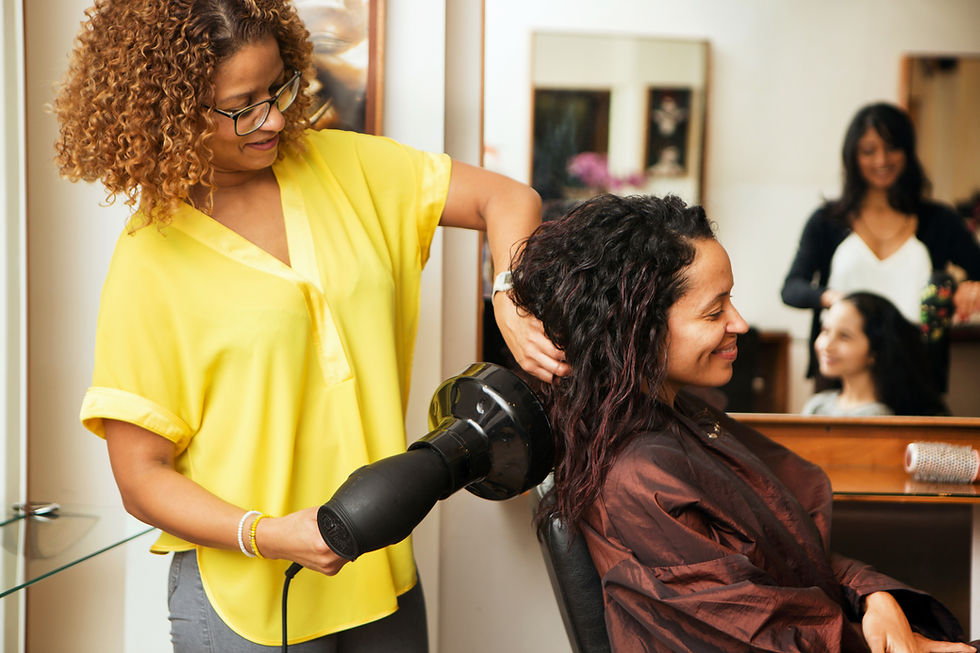
My cosmetology program taught me so much more than I ever imagined I would learn. Chemistry, anatomy, scalp diseases and conditions, physiology, electricity, nail fungi and diseases, hair structure and science, and color theory, to name a few. Sometimes my own mind is blown by how much knowledge I actually accumulated through the program. One thing I immediately noticed, though, was the very small section of our cosmetology textbook focused on natural hairstyling. This portion of the book covered braiding and cornrowing, Nubian twists and coils, locs, two-strand twists, and that was just about the extent of it. Textured-hair care and styling weren't necessarily treated as fundamental knowledge but rather as a specialty, with only a small range of skills covered. And it raised a question: If textured hair grows naturally from millions of people's heads, why has understanding it ever been optional in cosmetology education?
I Didn't Know What I Didn't Know

I entered cosmetology school already knowing how to create many different hairstyles for people in my community. But I didn't know what I didn't know. My own hair was texturized at the start of my cosmetology education journey. There even came a time when I gained a little knowledge and thought I could do a little something😂. I ended up lightening the front of my hair like Keyshia Cole, and that was a HUGE mistake! I damaged my hair, and I'll never forget it because this is actually how I began my own natural hair journey while in cosmetology school. I went to one of my instructors to see what she recommended for getting my hair back to better health. She told me to leave the color and texturizers alone for a while and begin a treatment journey. Every time I asked her if I could get another chemical service, she would tell me to keep waiting. As my natural texture began growing in, I realized that I really liked it. Eventually, I decided to continue growing out the chemically treated hair. In hindsight, I realize that she was intentionally guiding me through the transition process. I began to love my own texture and learn my own hair. Did I still make mistakes? Absolutely! I was learning cosmetology and discovering my own natural texture simultaneously. And that wasn't the end of me making mistakes, either. 😅
Experience Became One of My Greatest Teachers
The journey is important. We naturally learn and teach over and over through life's experiences. And even though they always told us in school that we would want to continue learning, being in the thick of it made me realize that obtaining my license wasn't the finish line at all. I made many mistakes early in my licensed career. I kept those experiences close so I could remind myself what not to repeat. Experience showed me what I still needed to learn. That realization eventually led me deeper into educating myself on hair loss, holistic wellness, trichology, ingredient knowledge, scalp health, nutrition, hormones, medications, true protective styling, and everything in between. My approach evolved into understanding which hairstyles might best support someone living a high-stress lifestyle. Guiding women through their postpartum hair changes while helping them minimize unnecessary breakage and tension. Recognizing when changes in the hair and scalp might warrant a closer look at nutrition, health, or lifestyle. It became about so much more than creating a beautiful hairstyle. I needed those experiences to become who I am in my career today.
Licensed vs. Qualified: There's a Difference
There is a difference between being licensed and being qualified. I went on a personal natural hair journey while simultaneously learning how to become a cosmetologist.
When I graduated, I still didn't grasp the full scope of what that meant. But I eventually realized that experiencing my own transition while in school gave me a perspective I would later use to help so many women transition back to their natural hair. I realized that a license establishes a professional baseline. Expertise requires continued learning. Someone can be licensed and still lack extensive natural hair experience. Someone can have years of lived experience with natural hair but lack professional education in areas a licensed cosmetologist is trained to understand. Both education and experience have value.
What I did not know, I became determined to learn, and that determination has helped me develop the expertise I have today.
Becoming the Professional I Needed to Become

Looking back at the young woman who walked into cosmetology school in the early 2000's, I can appreciate both what she knew and everything she had yet to discover. I didn't become the hair care professional I am today because I passed an examination. I became B'WARE through the clients who trusted me, the mistakes that challenged me, the instructors who guided me, the questions I wasn't afraid to ask, and the commitment I made to continue educating myself. And along the way, my relationship with natural hair changed. It was no longer just about what I could create with it.

It became about understanding it, protecting it, advocating for it, and celebrating it in every form. I went from learning how to style natural hair to understanding the responsibility of caring for it. That's why I don't believe in dismissing cosmetology education or discrediting the knowledge that exists outside of it. Licensing matters. Education matters. Experience matters. But so does the willingness to recognize what we don't know—and the responsibility to do something about it. If the beauty industry continues to evolve, the education preparing us to serve people should evolve with it. And shouldn't professionals, be willing to evolve too? My license gave me the foundation to begin. My experiences taught me the kind of professional I wanted to become. And I'm still evolving!
Let's Continue This Conversation LIVE! 🎥
I want to hear from YOU! Whether you're a licensed professional, a natural hairstylist, a barber, a student, or someone who's trying to find a professional who understands your hair, your perspective is valuable.
Have you ever questioned whether being licensed automatically means someone is qualified to care for your hair?
And for my fellow professionals, what did experience teach you that cosmetology or barber school didn't?
I'll be continuing this conversation during my upcoming YouTube Live discussion and Q&A November 30, 2026, where we'll talk more about cosmetology education, natural hair competency, the value of lived experience, and what we should expect from the professionals entrusted with caring for our crowns. Bring your questions, your experiences, and yes, even your disagreements😂. This conversation isn't about sides or who's right or wrong. It's about raising the standard of care while honoring the knowledge, history, and beauty of natural hair.
[Join the conversation on YouTube — B'WARE on YouTube]


Comments